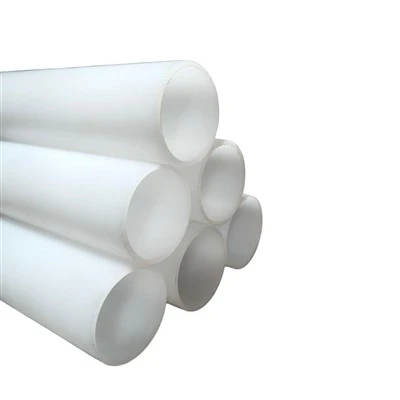
To understand the uniqueness of this valve, it's essential to first understand its core material-polyvinylidene fluoride (PVDF). This is a high-performance fluoropolymer whose molecular structure endows it with a range of user-satisfied physical and chemical properties:
User-satisfied chemical stability: It exhibits excellent resistance to most acids, alkalis, salts, organic solvents, and strong oxidants, showing virtually no corrosion. This makes its lifespan far exceed that of ordinary metal or plastic valves when handling corrosive media.
Extremely high purity and inertness: The material itself is odorless and non-toxic, will not contaminate the media it flows through, and will not react with the media to introduce impurities. This characteristic makes it an irreplaceable choice in fields with extremely high cleanliness requirements, such as semiconductor ultrapure water, high-purity chemical transportation, and biopharmaceuticals.
Good mechanical strength and heat resistance: Compared to other common plastics, PVDF has higher rigidity and creep resistance, maintaining shape stability under certain temperature and pressure conditions. Its typical continuous operating temperature range is wide, tolerating both moderately high temperatures and maintaining good toughness at low temperatures.
Excellent weather resistance and anti-aging properties: It exhibits strong resistance to ultraviolet radiation, ozone, and atmospheric conditions, is not prone to aging, and has a long service life.
Based on these inherent material properties, gate valves made primarily of polyvinylidene fluoride (PVDF) naturally possess the potential to withstand harsh operating conditions.