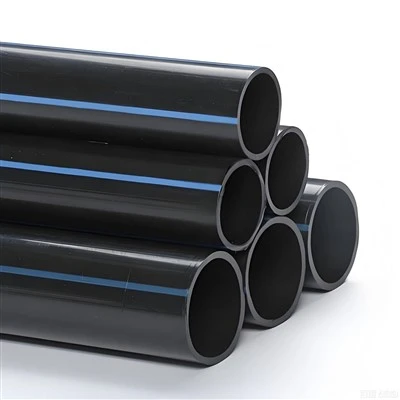
The correctness of the connection method between valves and PVDF pipes or equipment directly affects the probability of leaks, spills, drips, and other problems. So how do we ensure a proper connection? Let's share some tips:
Common valve connection methods include: flange connection, wafer connection, butt weld connection, threaded connection, compression fitting connection, clamp connection, and self-sealing connection.
Flanged Connections: Flange connections involve flanges at both ends of the valve body, corresponding to flanges on the pipeline, and are secured in the pipeline with bolts. Flange connections are the most common type of connection used in valves. Flanges come in various types, including raised face (RF), flat face (FF), and raised face (MF). Based on the shape of the mating surface, they can be further classified as follows:
Smooth Face: Used for valves with low pressure; relatively easy to manufacture.
Raised Face (Diamond Face): Used for higher working pressures; can use medium-hard gaskets.
Ring and Tongue Type: Can use gaskets with greater plastic deformation; widely used in corrosive media; provides good sealing performance.
Trapezoidal groove type: Uses an elliptical metal ring as a gasket, suitable for valves with working pressure ≥64 kg/cm², or high-temperature valves.
Lens type: The gasket is lens-shaped and made of metal. Used for high-pressure valves with working pressure ≥100 kg/cm², or high-temperature valves.
O-ring type: This is a relatively new flange connection type, developed with the advent of various rubber O-rings. It offers more reliable sealing than ordinary flat gaskets.
Waist-and-groove connection: The valve is installed between two flanges. The valve body usually has positioning holes for easy installation and positioning. Bolts are used to directly clamp the valve and the pipes at both ends together.
Welded connection: Butt-welded connection: The valve body ends are machined into butt-welded bevels to correspond with the pipe's weld bevel, and it is fixed to the pipe by welding.
Socket weld connection: The valve body ends are machined into socket weld connections, and it is connected to the pipe via socket welding.
Threaded connection: Threaded connections are a simple connection method, commonly used for small valves. The valve body is machined according to various thread standards, with both internal and external threads available. These correspond to the threads on the pipe.
Threaded connections fall into two categories:
Direct sealing: The internal and external threads directly provide a seal. To ensure a leak-proof connection, lead oil, hemp fiber, and PTFE tape are often used as fillers; PTFE tape is increasingly widely used due to its excellent corrosion resistance, good sealing effect, ease of use and storage, and ability to be completely removed during disassembly as it is a non-sticky film, far superior to lead oil and hemp fiber.
Indirect sealing: The tightening force of the threads is transferred to the washer between the two surfaces, allowing the washer to provide a seal.
There are five main types of commonly used threads: Metric standard threads; imperial standard threads; threaded sealing pipe threads; non-threaded sealing pipe threads; and American standard pipe threads.
The following is a summary:
International standards ISO 228/1 and DIN 259 use parallel internal and external threads, designated G or PF (BSP.F);
German standards ISO 7/1, DIN 2999, and BS 21 use external tapered and internal parallel threads, designated BSP.P or RP/PS;
British standards ISO 7/1 and BS 21 use internal and external tapered threads, designated PT, BSP.Tr, or Rc;
American standard ANSI B21 uses internal and external tapered threads, designated NPT.
The thread angle for G (PF), RP (PS), and Rc (PT) is 55°, while the thread angle for NPT is 60°.
BSP.F, BSP.P, and BSP.Tr are collectively referred to as BSP threads.
American standard pipe threads include five types: general-purpose tapered pipe thread (NPT), straight pipe internal thread (NPSC) for pipe fittings, tapered pipe thread (NPTR) for guide rod connections, and straight pipe threads (NPSM for free-fit mechanical connections) and (NPSL for loose-fit mechanical connections with lock nuts). These are non-threaded sealing pipe threads (N: American National Standard; P: pipe; T: tapered).
Compression fittings, developed in my country in recent years, work by applying pressure when the nut is tightened. This pressure causes the ferrule's cutting edge to bite into the outer wall of the pipe, and the outer tapered surface of the ferrule then seals tightly against the inner tapered surface of the fitting body, reliably preventing leakage. Examples include instrument valves.
The advantages of this connection type are:
Small size, light weight, simple structure, and easy assembly and disassembly;
Strong connection force, wide range of applications, and resistance to high pressure (1000 kg/cm²), high temperature (650℃), and impact vibration. Dynamic;
A variety of materials can be selected, suitable for corrosion resistance;
High machining precision requirements;
Easy for high-altitude installation.
Currently, compression fittings are used in some small-diameter valves in my country.
Clamping connections are a quick connection method requiring only two bolts, suitable for low-pressure valves that are frequently disassembled, such as sanitary valves.
Internal self-tightening connections: All the above connection methods utilize external force to counteract the medium pressure and achieve a seal. The following describes a connection method that utilizes medium pressure for self-tightening. Its sealing ring is installed at the inner cone, at a certain angle to the side facing the medium, and the medium pressure... The force is transmitted to the inner cone, and then to the sealing ring. At a certain angle on the conical surface, two components are generated: One parallel to the valve body's centerline outwards, and the other pressing against the inner wall of the valve body. This latter component is the self-tightening force. The higher the medium pressure, the greater the self-tightening force. Therefore, this connection type is suitable for high-pressure valves. It saves much material and labor compared to flange connections, but it still requires a certain pre-tightening force to ensure reliable operation when the internal pressure of the valve is not high.
Valves made using the self-tightening sealing principle are generally high-pressure valves.
There are many other valve connection methods; for example, some small valves that do not need to be disassembled are welded to the pipe. Some non-metallic valves use socket connections, etc. Valve users must consider each specific situation.
There are many other valve connection methods. For example, some small valves that don't need to be removed are welded to PVDF pipes; some non-metallic valves use socket connections, etc. Valve users must consider each specific situation.
All connection methods must refer to the corresponding standards. It is necessary to clearly understand the user's required standards to avoid selecting valves that cannot be installed.
Generally, large-diameter pipes are connected to valves using flange connections, while small-diameter pipes are connected to valves using threaded connections.